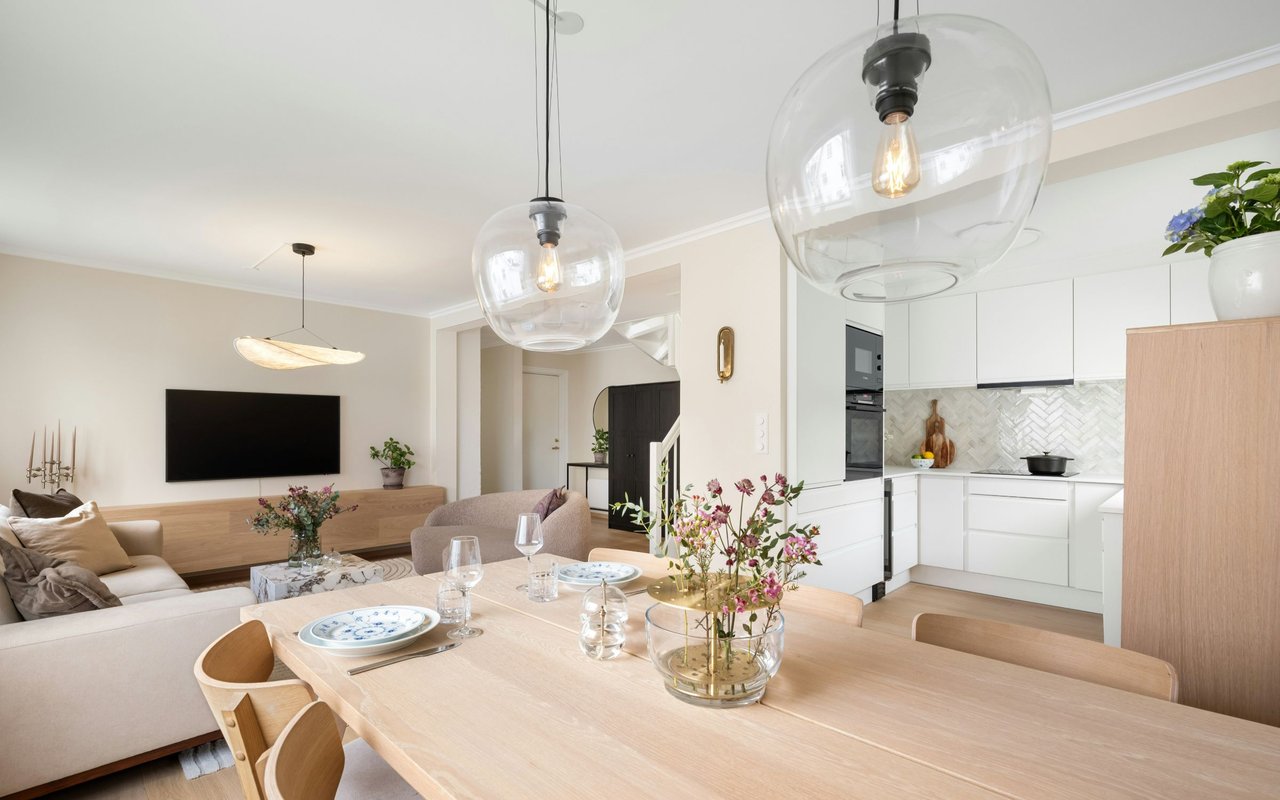
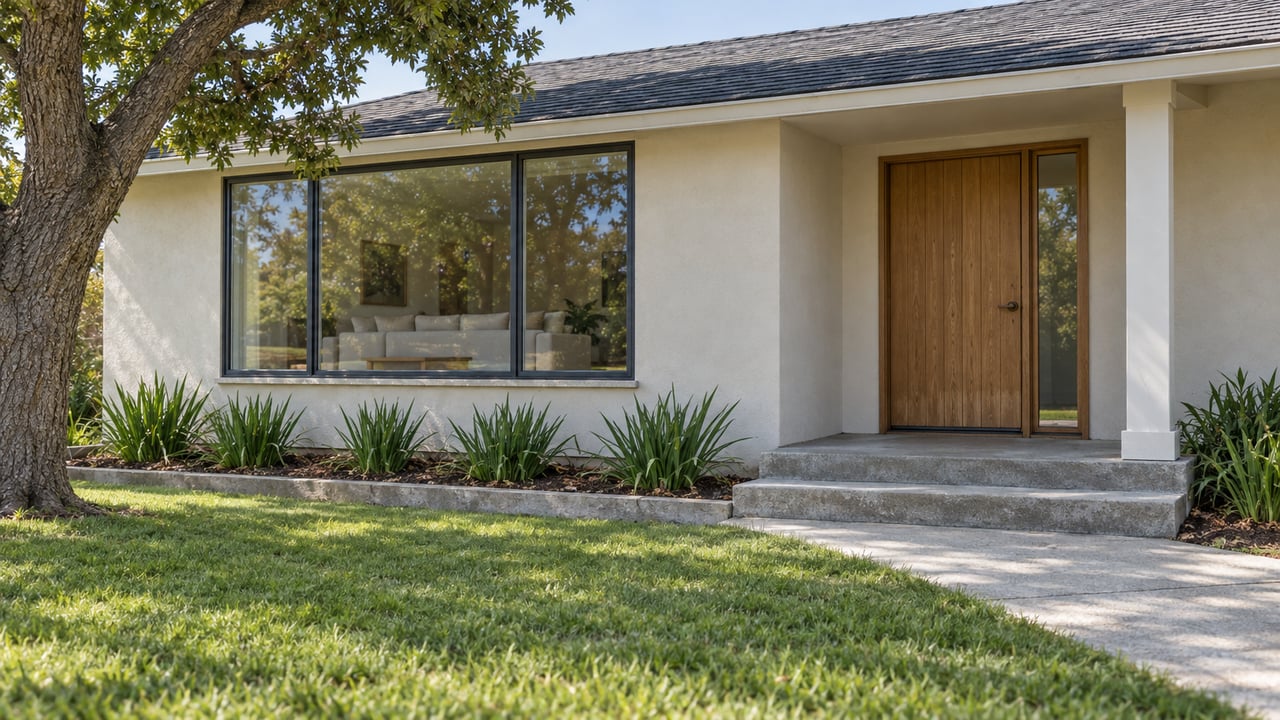
The house at 606 S. Delaware St. sits between two one-story homes, with the San Mateo Lumber yard on South Claremont Street behind it. It is about 0.4 miles from the downtown San Mateo Caltrain station. The San Mateo Daily Journal reported that its owner has applied to demolish it and build a five-story building with 20 rental studios and no on-site parking. It is the first application in the city filed under Senate Bill 79.
Gustavo Hornos, the owner, told the paper the family has lived there since 2013. He also pointed out that a nearby public garage has more than 500 spaces. San Francisco YIMBY reported on August 1, 2026 that the preliminary plans include two studios deed-restricted for very-low-income households, two for moderate-income households, about 22,000 square feet in total, and 21 bicycle spaces.
For anyone shopping near a San Mateo station, this application shows something the median price can't. Near Caltrain, the city no longer decides what the lot next door can become. A state rulebook based on distance from the station decides it. And a measure San Mateo voters passed in 2024 is the reason the city can't easily change that.
The rulebook now in force near the stations
SB 79 was signed on October 10, 2025, and took effect on July 1, 2026, according to the California Department of Housing and Community Development. The City of San Mateo's SB 79 FAQ, prepared August 31, 2026, names the areas it covers. They are the half-mile around the city's three Caltrain stations, Downtown, Hayward Park and Hillsdale, plus the part of the Burlingame station area that reaches into San Mateo. All of them are Tier 1. Distance is measured from a station's pedestrian access point, not from the middle of the platform.
The standards step down with distance:
| Distance from a station access point | Height limit | Max density | Floor area ratio |
|---|---|---|---|
| Within 200 feet | 95 feet | 160 units per acre | 4.5 |
| Within a quarter-mile | 75 feet | 120 units per acre | 3.5 |
| Quarter-mile to half-mile | 65 feet | 100 units per acre | 3.0 |
A project has to clear a few thresholds to use these numbers. It needs at least five units, a density of at least 30 units per acre, and an average unit size of no more than 1,750 net habitable square feet. It also has to meet the state's affordability, labor and tenant-protection requirements. The law does not apply to sites where occupied rent- or price-controlled housing would be torn down under the conditions the FAQ spells out. The city confirms that some single-family properties fall inside these areas. Owners there can still build under local rules, including a single-family home where local zoning allows one.
The 1,750-square-foot cap matters most for buyers. SB 79 projects come out as apartments and small units, not big homes. The Delaware Street application is 20 studios.
Why San Mateo can't reshuffle the map
SB 79 gives cities one way to shape it. A city can adopt an Alternative Transit-Oriented Development Plan that removes some sites. The catch is that the city must keep the same overall housing capacity across its station areas, so any capacity taken off one site has to be added somewhere else.
San Mateo is in an unusual position because its height and density limits came from the ballot box. Measure H set them in 1991. Measure P extended them in 2004. Measure Y in 2020 set the citywide baseline at 55 feet or five stories, 50 units per acre, and a 3.0 floor area ratio. Measure T replaced Measure Y. It approved the General Plan 2040 Land Use Element, which allows more height and density in ten study areas focused on downtown, El Camino Real and the Caltrain corridor, and keeps the Measure Y limits across the rest of the city, apart from a handful of individual properties the ordinance names. It passed on November 5, 2024, with 25,271 yes votes, or 59.39%, to 17,283 no votes, according to the city's ballot measure history.
Measure T's ordinance generally requires a public vote to change those height, density and intensity standards, and it bars raising a parcel's allowed density without one, apart from a short list of specific properties it names. An alternative plan only works if the city can move capacity from one parcel to another. Measure T froze those parcel numbers. The city's FAQ puts it this way:
"Due to the limitations imposed by Measure T, approved by the San Mateo voters in 2024, adopting an Alternative TOD Plan to reallocate housing capacity to other areas is not feasible for the City without voter approval."
So the city says it is not adding SB 79 to its zoning code. For any project that uses the law, the state standards apply directly and override conflicting local rules. The San Mateo Record covered the same position on September 2, 2026.
The measure written to give San Mateo voters control over height and density is what keeps the city from adjusting the state's half-mile circles. Inside those circles, the table above now governs.
How neighboring cities handled the same law
Other cities nearby had more options. Redwood City Pulse reported that the Redwood City council voted unanimously in July to accept the state standards and to pursue its own alternative plan for spring 2027. The city expects little near-term effect because of its existing downtown plans and entitlements.
The Daily Journal reported that San Carlos voted in March to temporarily exempt certain downtown zoning designations. Single-family areas east of Old County Road were left exposed. There, the reported minimum density for affected single-family parcels could be 60 units per acre, or at least seven units on a typical 5,000-square-foot lot.
The same state law is producing different local results within a few miles. San Mateo is one of the few places where the state version is likely to stay in place, because changing it would take another citywide vote.
Where the September numbers put the pressure
SB 79 adds the option of building small units. The September 2026 figures from the San Mateo County Association of REALTORS, based on MLSListings data and published October 9, 2026, show that single-family homes are where supply is tightest.
- Single-family homes, September 2026. San Mateo had a $2,175,000 median sale price, 14 average days on market, 107% of list price received, 39 homes in inventory, and 0.9 months of supply. In September 2025 the median was $2,230,000 and the median price per square foot was $1,287, compared with $1,305 this September. Prices per foot are roughly flat and supply is under a month.
- Condos and townhomes, September 2026. The median was $1,064,000, with 41 average days on market, 100% of list received, 85 units in inventory, and 3.4 months of supply. That median is about 29% above September 2025's $825,000. The sample is small, though: 24 sales this September compared with 27 a year earlier. The average unit sold also got larger, from 1,195 to 1,295 square feet, and median price per square foot rose about 10%, from $715 to $790. Most of the jump in the median reflects bigger units selling, not every condo gaining 29%. The firming is still real. Sellers went from getting 95% of list to 100%, and average days on market dropped from 85 to 41.
What SB 79 allows doesn't match what's scarcest. The law favors apartments with an average unit size under 1,750 square feet. The tightest market in the city is detached homes, with 39 listings in September. An SB 79 project near a station would add multifamily units, often rentals. It would reduce the single-family stock by one lot at a time.
What's filed is not the same as what's allowed
In San Mateo, the application on record in local reporting is 606 S. Delaware, which the Daily Journal described as the city's first, and the city keeps a project page for it. Other Peninsula cities show where developers are looking. Palo Alto reported on August 4, 2026 that it had nine preliminary SB 79 applications for 341 homes, including a six-unit proposal at 340 Palo Alto Ave. in R-1 zoning. Those are preliminary filings, with formal applications due within 180 days. In Atherton, The Real Deal reported that Cupertino-based AlphaX RE Capital applied for 30 townhomes, six of them affordable, on a one-acre single-family lot at 110 Glenwood Avenue near the Menlo Park Caltrain station.
Every example above is an application or a preliminary filing. None is a finished building, and the Palo Alto proposals still have to become formal applications.
Questions buyers raise near a station
How do I know whether a specific property is inside an SB 79 area?
The city's FAQ points to the Metropolitan Transportation Commission's map of transit-oriented development stops, access points and zones for the Bay Area. Distance runs from a pedestrian access point, so a home that looks close to a station on a street map can land in a different band than expected.
Does SB 79 force anyone to build apartments?
No. Using the law is up to the applicant, and a property owner can keep building under the city's local rules.
Could San Mateo still change how SB 79 applies?
According to the city, adopting an alternative plan would take voter approval because of Measure T. Until that happens, the state standards apply directly to projects that use the law.
If you're weighing a home near the Downtown, Hayward Park or Hillsdale stations, Suzanne Garcia can help you find which distance band a property falls in, check the city's project pages for nearby filings, and compare the latest SAMCAR figures for homes and condos before you make an offer. Let's Connect.
This article is general information, not legal, tax or financial advice. Consult a qualified professional about your situation.